Institute of Tropical Forest Conservation


Mbarara University of Science and Technology


Home

About ITFC

ITFC staff

Directions

Facilities

Fees

Donors & partners

Where we work

ITFC programmes

Forest & wildlife ecology

Community-park- wildlife

Ecological monitoring

Management assistance

Training

Research opportunities

Contact us


Where we work

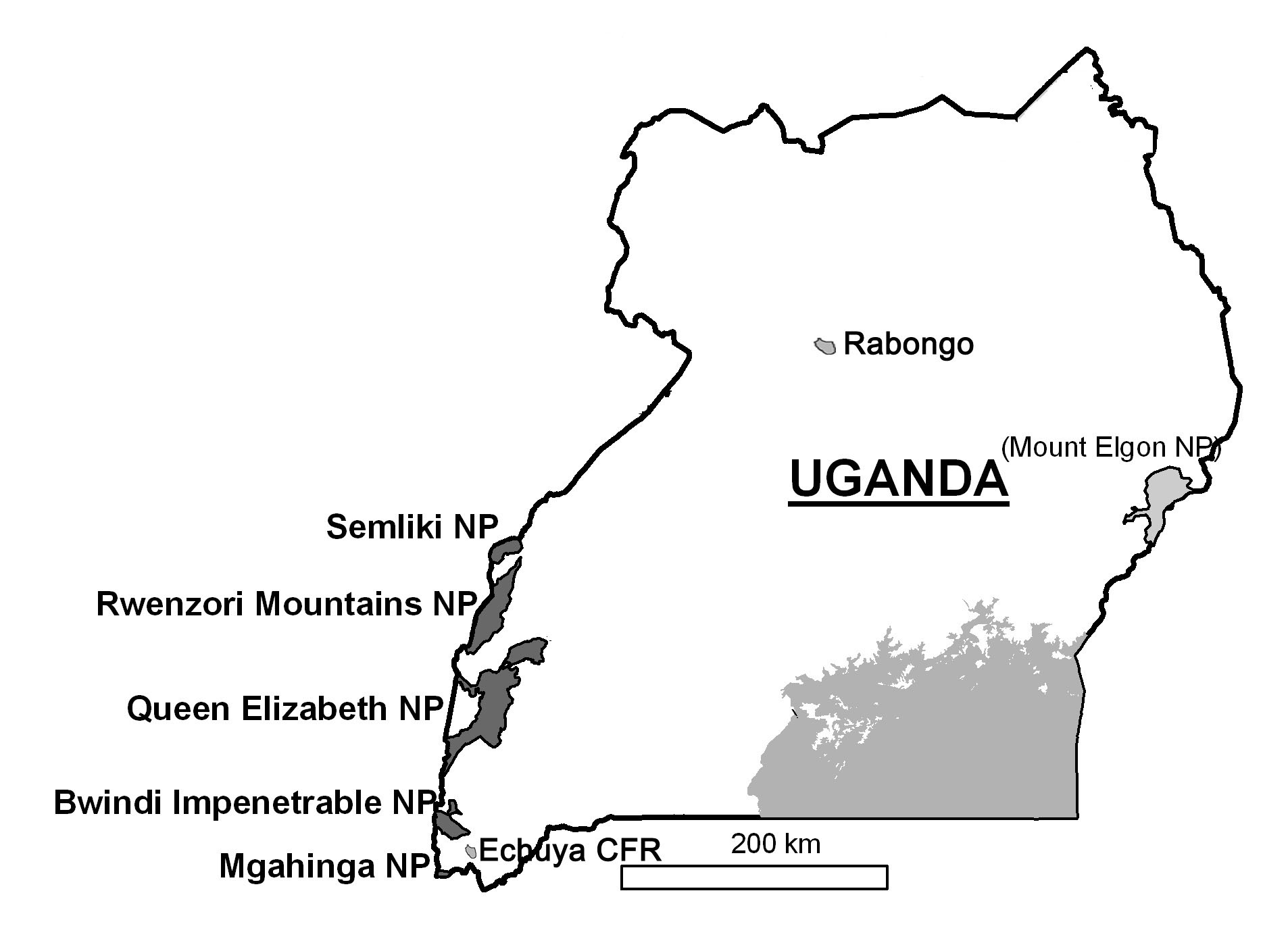
The Albertine Rift region, along the borders of Western Uganda and Tanzania, Rwanda, Burundi, and Eastern Democratic Republic of Congo, has been identified by many organisations as one of the highest priorities for biodiversity conservation in Africa.  It is the most species rich region for vertebrates on the continent (Brooks et al., 2001) and has a high diversity of most other taxa which have been studied. In addition, it supports many rare and endemic species (Plumptre et al., 2003).  The montane forests of this area are particular important for conservation and have received the most attention, but a wide variety of other habitats contribute to the overall richness of the area.  The biodiversity of this area is described in detail in the WCS Albertine Rift Technical Report Series publication no 3. Biodiversity of the Albertine Rift (Plumptre et al., 2003).

 Within the Albertine Rift, ITFC’s programmes are carried out within an area known as the Greater Virunga Landscape (GVL). The GVL is probably the most important part of the Albertine Rift for conservation, with a wide variety of habitats and altitudes, from 600m-5100m above sea level, from bare rocks and glaciers on the top of the Rwenzoris, to alpine and montane forests, lakes, swamps and savannahs, down to lowland forests.  Species richness in the GVL is particularly high, as are the numbers of endemic and threatened species. Among the innumerable species which inhabit this area, the mountain gorillas have above all captured the attention and imagination of the world.  There are only around 700 mountain gorillas in the world, living along the borders of Rwanda, Uganda and DR Congo, all within the GVL.

The volcanic soils in much of the GVL are very fertile, and the area supports extremely dense human populations, with up to 6-800 people per square kilometre in places.  These communities suffer high levels of poverty and are largely dependent on natural resources for their livelihoods, which presents serious challenges for biodiversity conservation.  The natural resources and environmental services which forests and other protected areas provide are of great importance to local communities living in the area, as well as to national economies.  For example, households living around forests may derive between 11 and 27 % of their annual income from use of forest resources, which equates to almost a $200 million contribution to the national economy of Uganda, while indirect use values including watershed protection, carbon sequestration, biodiversity values and soil conservation have been estimated to be worth over $120 million nationally and globally (Bush et al., 2004).  Some protected areas are important tourism attractions, which generate revenue for local and national economies.  For example, mountain gorilla tourism has been estimated to be worth over $20 million per year, although a relatively small proportion of this is accrued at the local level (Hatfield, 2004). 

Conservation programmes need to take account of interactions between biological and socio-economic factors across the area, and must aim to reconcile biodiversity conservation objectives with the development needs and aspirations of the local population. Almost all of the unprotected natural habitat has been cleared for agriculture, and most of the protected areas are isolated islands of habitat.  Many are still threatened by encroachment, as well as bushmeat poaching, harvest of trees for timber, building poles, firewood and charcoal production, human-induced fires, invasive exotic species and human-wildlife disease transmission.

References:

Brooks, T., Balmford, A., Burgess, N., Fjeldsa, J., Hansen, L.A., Moore, J., Rahbek, C.  and Williams, P.  (2001) Towards a blueprint for conservation in Africa.  Bioscience 51, 613-624.

Bush, G., Nampindo, S.  Aguti., C.  and Plumptre, A.J.  (2004) The Value of Uganda’s Forests: A Livelihoods and Ecosystems Approach.  Wildlife Conservation Society, Unpublished report to National Forest Authority.

Hatfield, R.  (2004) The economic value of the mountain gorilla forests: benefits, costs and their distribution amongst stakeholders.  Paper presented to the International School of Tropical Forestry, Yale University Spring 2004 Conference (http://www.bioecon.ucl.ac.uk/Kings papers/Hatfield.doc)

Plumptre, A.J., Behangana, M., Davenport, T., Kahindo, C., Kityo, R.,  Ndomba, E., Nkuutu, D., Owiunji, I., Ssegawa, P., and Eilu, G.  (2003) The Biodiversity of the Albertine Rift.  Albertine Rift Technical Reports No.  3, pp105.